
Our holistic approach to nature-based carbon sinks governance requires taking into account the wider resource dependencies of Southeast Asia’s majority urban population – over 330 million people in 2019 – in which the carbon footprint of Singapore’s urban population features prominently.
To establish linkages between nature-based carbon sink resources and the values and consumption choices of Southeast Asia’s urban population, we will include a revealed preference experiment that utilizes informed choice as a mechanism to assess the willingness of urban residents in Southeast Asia’s cities to pay for the ecosystem services provided by nature-based carbon sinks in remote and rural areas.
Our research will compare, contrast and integrate findings from the empirical research on terrestrial forests, coastal and freshwater ecosystems, peatland and agricultural soils. We will examine the constraints and opportunities for carbon governance and integrate findings to test the necessity of holistic nature-based carbon sinks governance in the implementation of low-carbon technologies.
Publications:
Miller MA (2025) Carbon territoriality at the land-water interface. Global Environmental Change 90 (March): 102954.
Dang TK, Le HG, Tran TL & Lau Y (2025) Seeking carbon justice through grassroots-led forest carbon measurement: learning-by-doing in Vietnam’s HEPA farmers field school. Local Environment 31(2): 206-213.
Lau Y & Quevedo JMD (2024) The Prospects of Participatory Research in Improving Climate Literacy: Insights from Experiences with Indigenous People and Local Communities. Environmental Justice.
Miller MA & Taylor D (2024) A Transboundary Agenda for Nature-Based Solutions across Sectors, Scales and Disciplines: Insights from Carbon Projects in Southeast Asia. Ambio 53(4): 534-551.
Next:
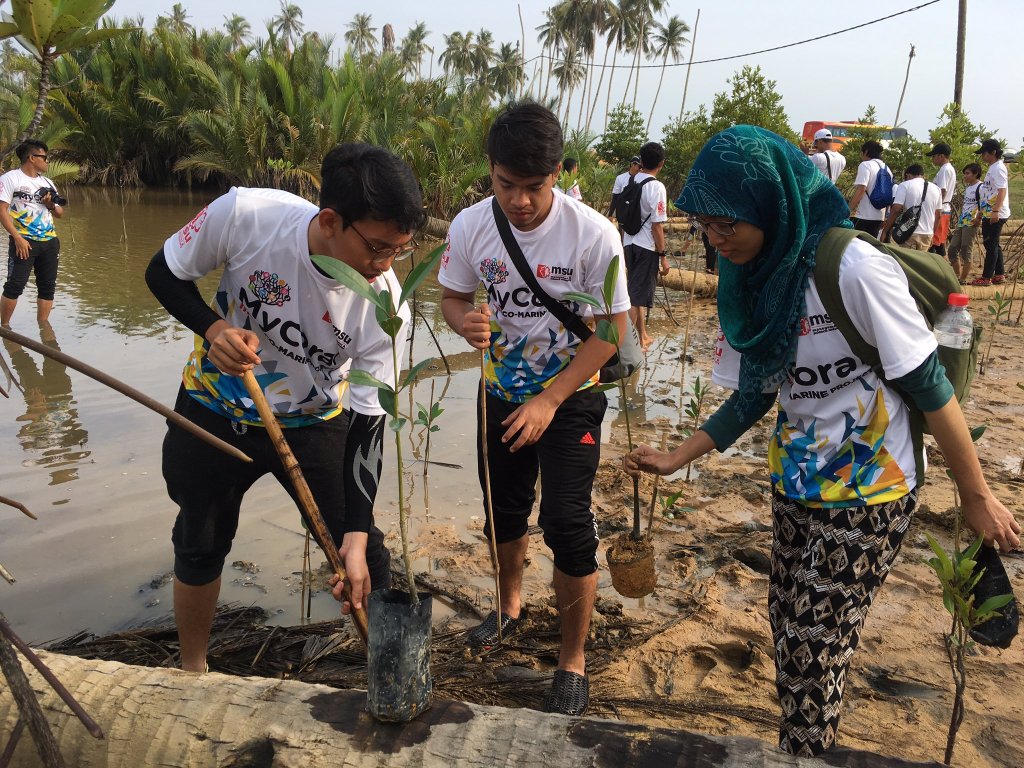
Photo by Management and Science University Malaysia
 Carbon Governance in Southeast Asia (CGSEA)